Before the cold sets in: preparing your parents’ home for a North Indian winter
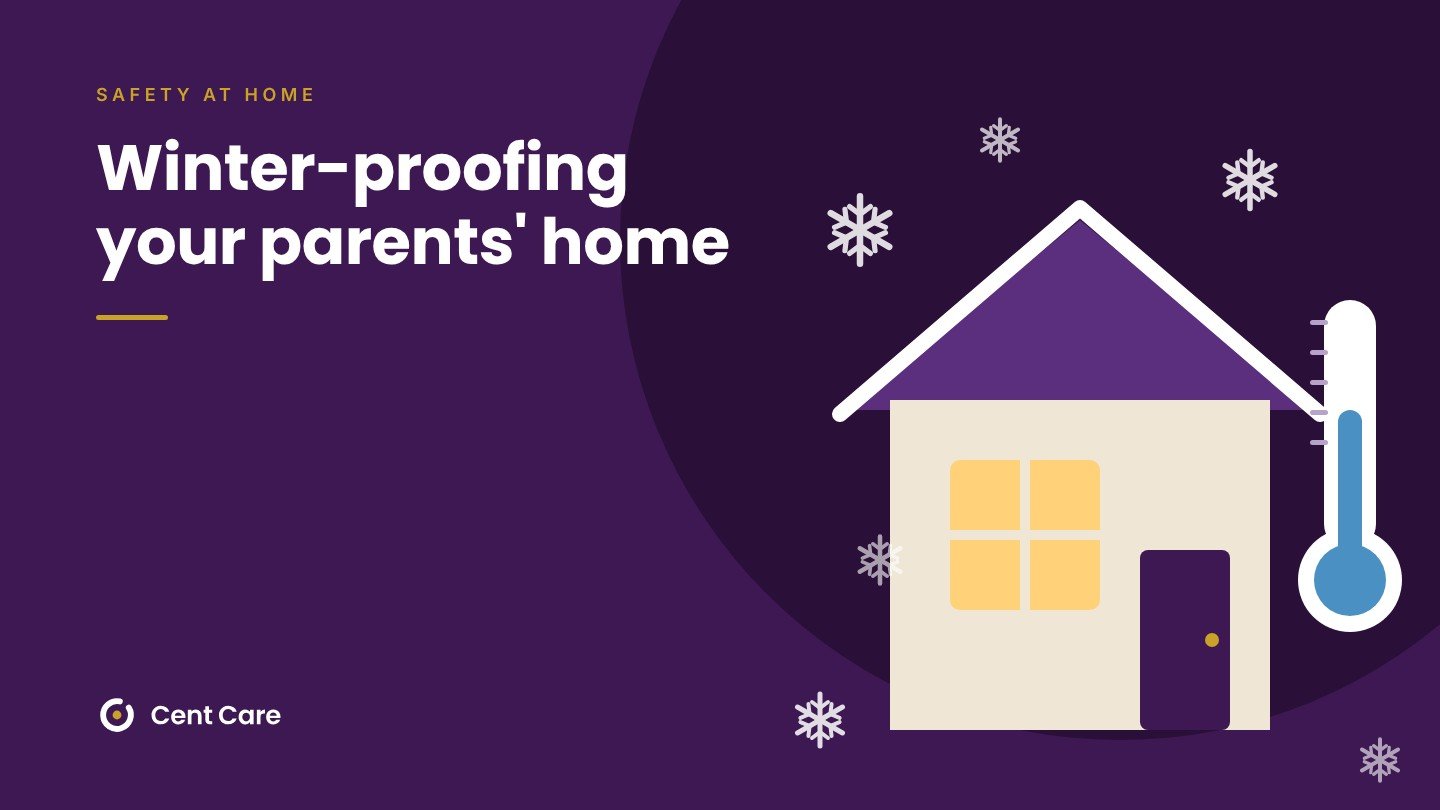
Winter arrives quickly in the north. By late December, Punjab, Haryana, Delhi and much of Uttar Pradesh can sit under fog and cold waves for days at a time. Older people feel the cold more, move less in it and spend more time indoors, often in one warm room with the doors shut.
That warm, sealed room is where most winter tragedies happen. November is the time to check the house, before the first cold wave.
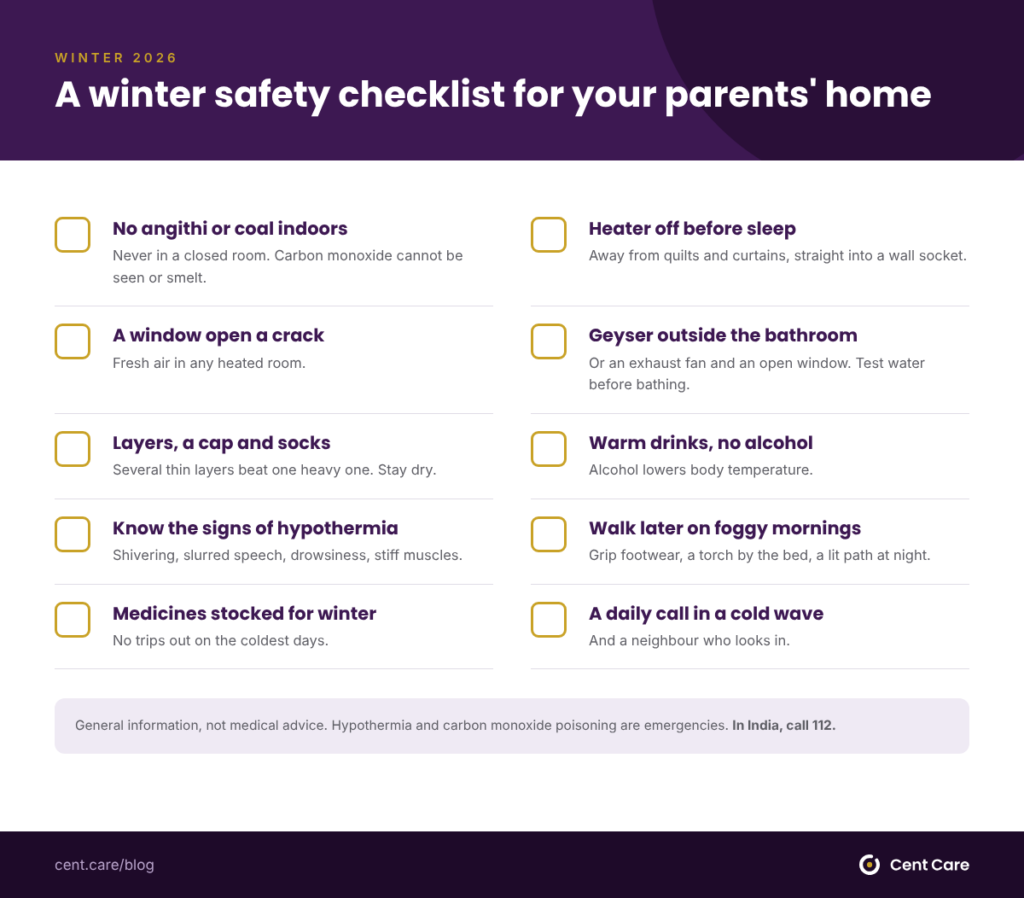
1. Never heat a closed room with coal or wood
An angithi or a coal brazier in a closed room gives off carbon monoxide, a gas you cannot see or smell. In January 2026, a young couple and their six-week-old baby died in Tarn Taran district after lighting a coal brazier indoors with the doors and windows shut. Source A 15-year study at AIIMS New Delhi found that 95 per cent of carbon monoxide deaths happen in winter, mostly from coal burning in poorly ventilated spaces. Source
- Do not burn coal or wood indoors to keep warm. The national cold-wave advisory is clear on this. Source
- If a heater uses fuel or a flame, it does not belong in a bedroom.
- Warning signs of carbon monoxide include headache, dizziness and drowsiness, which older people may put down to the cold. If several people in a room feel unwell, get everyone into fresh air and call 112.
2. Electric heaters: safer, not risk-free
- Switch heaters off before sleeping. Source
- Keep them well away from bedding, curtains, quilts and drying clothes, and never cover them.
- Plug them straight into a wall socket, not into an extension board with other appliances.
- Keep the air moving. Long hours of heating dry the air, which can worsen asthma and allergies. Source Leave a window open a crack, and keep water nearby.
3. Gas geysers and the bathroom
Gas water heaters fitted inside small bathrooms have caused deaths for more than two decades, so often that doctors gave it a name: gas geyser syndrome. Source The danger is carbon monoxide in a small, closed space.
- The geyser should be outside the bathroom, in a ventilated spot. If it is inside, an exhaust fan and an open window are essential.
- Replace very old units, and consider an electric or solar heater instead.
- Check the water temperature before your parent steps in. Older skin scalds easily.
- Make the bathroom safe in other ways too: grab bars, a non-slip mat and a stool for sitting while bathing. Our home safety checklist covers the rest of the house.
4. Dress, eat and drink for the cold
- Layers work better than one heavy garment, and a cap, socks and gloves matter for older people. Stay dry; damp clothes chill quickly. Source
- Warm drinks through the day, and no alcohol to “stay warm”: it lowers body temperature. Source
- Keep medicines stocked for the winter months, so that no one has to go out on the coldest days.
5. Know the warning signs of hypothermia
Shivering, slurred speech, drowsiness, stiff muscles and weakness can be signs that the body is losing too much heat. The national cold-wave advisory calls hypothermia a medical emergency. Source Move the person somewhere warm, change any damp clothes, give a warm drink (not alcohol), and get medical help.
6. Fog, falls and early walks
- Move the morning walk to later in the day when fog is dense. Visibility on roads can drop sharply, and terraces and floors become slippery with dew.
- Light the path at night from bedroom to bathroom, and keep a torch by the bed for power cuts.
- Wear footwear with grip indoors and out.
7. Check in more often during a cold wave
The national advisory asks people to look after the elderly and check on neighbours who live alone. Source If your parents live on their own, a daily call during a cold wave is not too much. Ask a neighbour to look in too.
Where Cent Care fits in
Before winter, our Care Managers walk through the house with your parents: where the heater is, how the geyser is fitted, whether the bathroom is safe, whether the medicines will last. During cold waves we keep a closer eye and keep the family informed. Our Care Managers are trained Armed Forces veterans who visit on a fixed schedule, log every visit and keep the family updated, wherever they live. They are not doctors or nurses and do not give medical advice. If you would like that support, book a free home visit.
Sources: Three of family die from asphyxiation due to coal brazier in Tarn Taran, NewsDrum, January 2026; Room heaters emerge as a silent killer this winter, News Arena India, 12 January 2026; Advisory for Cold Wave 2023-24 and Do’s and Don’ts, based on NDMA guidelines, hosted by the Punjab Revenue Department; Beware of gas geysers, The Tribune, 16 February 2025.
Important information. This article is general information and the personal view of the author, written for families. It is not medical, nursing, clinical, legal, financial, tax, investment or insurance advice, and it is not a substitute for advice from a qualified professional who knows your family’s circumstances. Always consult your parent’s doctor or another qualified healthcare professional about any health question, and a qualified adviser before making financial decisions. In an emergency, call 112 immediately. Government scheme rules, interest rates, eligibility criteria and deadlines change; always confirm the current position with the official website, bank or office concerned before acting. While we try to keep this information accurate and up to date, Cent Care Technologies Pvt. Ltd. makes no representations or warranties about its completeness, accuracy or suitability for your situation, and accepts no liability for any loss or harm arising from reliance on it. Statistics and figures are taken from the sources cited and may change. Links to external websites, apps and helplines are provided for convenience only; Cent Care does not operate, control or endorse them. Descriptions of Cent Care’s services are general; the terms of your service agreement apply.
This article is general information for families, not medical advice. For any health concern, speak to your parent's doctor. In an emergency, call 112.